
Inflection
What happens in the first 180 days decides the next three years.
A founder-led advisory practice for senior leaders at moments of consequential transition — reading the mandate, the leader, and the terrain as one problem.
Mandate · Leader · Terrain
The problem
The window is finite.
A senior transition is not a career event. It is the structural moment when a leader’s mandate, tenure, and relationship with the organisation are either built well or not built at all.
The patterns that define a tenure are set in the first weeks — in every meeting, every decision held or deferred, every signal sent. The organisation does not wait for a leader to feel ready before forming its judgement. By the time the cost of a slow start is felt, the window in which those patterns were most revisable has already narrowed.
What this moment asks for is not more process. It is someone who has seen enough of these moments to read yours clearly — outside the situation, and therefore able to see what you cannot.
Someone who will tell you what is true, not what is comfortable — and who is present when the decisions that matter are made.
The framework
Three questions you are already living.
We do not begin with recommendations. We begin by reading — across three dimensions most advisors treat as separate problems. Reading all three at once is what makes an accurate picture possible.
The Mandate
What is this role actually asking of me — not what was described in the process, but what will determine whether this tenure is judged a success? Get the mandate wrong at the diagnostic stage and everything built on it is wrong too.
The Leader
What do I bring to this specific context — and where might the very things that got me here work against me? The question is not whether this is a good leader, but what this moment asks of them, and where the gap sits.
The Terrain
What is the organisation I am entering — really? Where does trust actually sit? What will people do with a new leader before I have shown them who I am? Every organisation is an ecosystem before it is an organogram.
The founders
Every Inflection engagement is a founder engagement. Not as a quality guarantee — as a structural commitment. The reading that makes the diagnostic accurate depends on the judgment of the person in the room, not on a methodology that can be handed to someone else.
A single practitioner reads one dimension deeply. Two founders who have operated at this level — across business and leadership, across geographies and organisational cultures — hold all three dimensions simultaneously. That is not a structural feature of the practice. It is the practice.
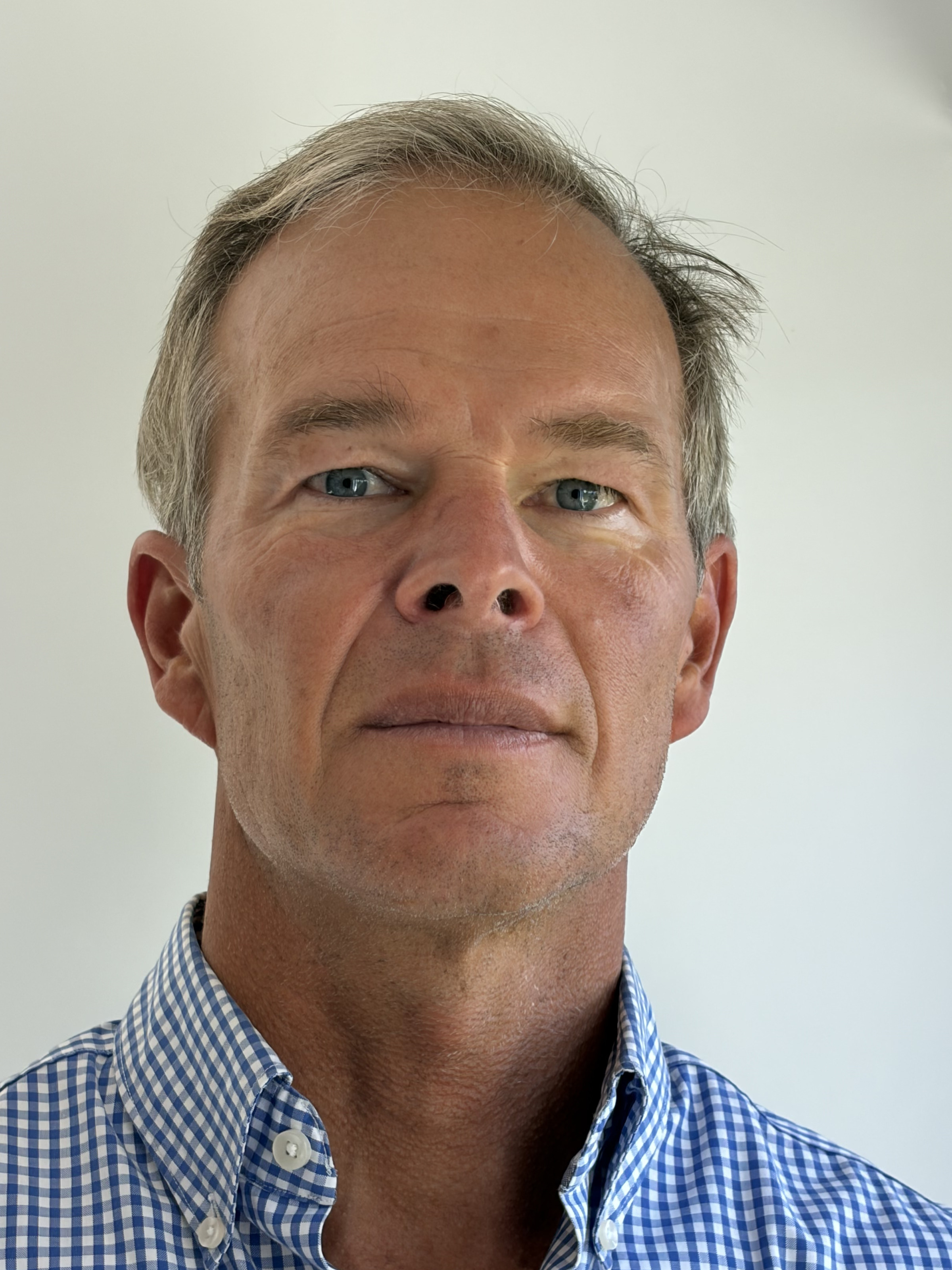
Luis Faria e Maia
Growth Acceleration & Commercial Transformation
Lisbon, Portugal
Brings the business and mandate lens: the commercial logic beneath the stated brief, the board relationship, and the real levers of the transition.
Senior leader at Danone across seven markets — Portugal, Brazil, Turkey, Czech Republic, Russia, Japan. Rose from Brand Manager to President & Representative Director of Danone Japan (2014–2020), leading a full P&L, a commercial turnaround, and deep cultural transformation inside a complex market. In every market, the challenge was the same: turn consumer insight into profitable growth while transforming the culture and organisation that delivers it. Now works directly with CEOs and leadership teams — in food, consumer goods, and health — on stalled growth, strategic clarity, and the behavioural transformation that makes strategy real. A partner who stays in the work.
IMD High Performance Leadership · IMD Orchestrating Winning Performance · Universidade Católica Portuguesa, BBA
LinkedIn →
Anouk De Blieck
Leadership Transitions & the Conditions for Impact
Lombardia, Italy
Brings the leadership and terrain lens: how leaders land, how organisations receive them, and the political and cultural architecture that will either support or obstruct the mandate.
Senior leader and advisor across Technology, Payments, FMCG, and Banking — Citibank, ANZ, Visa, SoftServe. Global CHRO roles across EMEA, CEE & CIS countries, Asia Pacific, North America, and Oceania, leading teams of up to 600 people supporting more than 20,000 employees, shaping people strategies through growth, crisis, and transformation. Career spanning New York, Moscow, Hong Kong, Singapore, Melbourne, and Lombardia. Originally from Antwerp, Belgium. Now works with boards and executive teams through organisational transitions, turnarounds, and growth moments — helping leaders and teams become better versions of themselves. Holds up the mirror with honesty and care, building the internal muscle so progress outlasts the work together.
Certified Chair, Advisory Board Centre · IMD Board Director · Marshall Goldsmith Executive Coach · Cornell HR · MIT Executive Leadership
LinkedIn →Situations
The moments we are built for.
These are not case studies. They are the kinds of transition where an accurate reading from the outside changes the outcome.
The Incoming CEO
First ninety days in a new organisation, or a new mandate in an existing one. The brief on paper and the real brief are rarely the same — and the cost of discovering the gap late is measured in years, not quarters.
The PE-Backed Principal
Taking over a portfolio company with the investment clock already running. The mandate is set by the value-creation horizon, and the board is partner and assessor at once — a political logic that rewards reading it early.
The Seasoned Executive in New Terrain
A proven leader entering a markedly more complex or political environment than the last. The instincts that built the track record are exactly what need re-examining against an organisation that will decide who you are before you can show them.
Family businesses in transition and incoming board chairs sit within the same frame. If that is your moment, the conversation is open to you too.
The practice is deliberately small. Not every engagement is the right one — for either party. We will say so directly if the fit is not there.
The first weeks
What working together can look like.
Stage one builds something most senior leaders have never had: a picture of their own transition from the outside — precise, honest, and built over real conversations rather than a one-off assessment.
What follows is one illustration. No two situations are the same, so the shape of the work adapts to yours — this is the rhythm, not a fixed script.
Session 0
An open conversation
A short, focused conversation about the moment you are in. You leave with one clear, useful observation — about your mandate, your terrain, or your own pattern. Just a talk, and always without charge.
Session 1
The first working session
The relationship forms. We introduce the three-dimension frame and begin the reading together.
Sessions 2–3
What you put on paper
The three questions, in your own account of the situation. The diagnostic deepens, with structured instruments where they help.
Session 4
We give back our reading
The picture sharpens. We test and refine it with you, then share it openly — discussed, not delivered.
Within 5 days
The letter
A private diagnostic memo follows within five working days — addressed to you alone.
Typically four to six weeks from the first working session to the diagnostic memo.
What you have at the end
The Heatmap
A visual reading across the three dimensions: where the strongest impact opportunity sits, where the patterns to watch are forming, where attention is needed now.
The Diagnostic Memo
A private letter of two to three pages — short and direct. What we heard, and what we read beneath it.
Your plan from here
Not a template. A proposed way of working together, built entirely from what the diagnostic showed — your mandate, your terrain, your timeline.
The arc from here
Where the reading leads.
The diagnostic is the beginning, not the whole of it. What follows is scoped entirely to what the reading reveals — no two engagements run the same length or shape. One principle holds throughout: you run the transition; we make sure the reading of it stays accurate.
Stage one
The reading
The diagnostic sequence above. You end with a clear picture of your mandate, yourself in this context, and the terrain — where the greatest impact sits, and where the risks are already forming.
Stage two
The critical window
The intensive phase, when the patterns of a tenure are actually set. The critical relationships built, the early signals sent deliberately, and the organisation’s read of you actively managed rather than left to chance.
Stage three
Sustained navigation
The partnership through the harder middle of the first year, at a lighter cadence. We hold the diagnostic picture against what actually unfolds — naming drift before you feel it, and keeping open one genuinely honest channel — a rarity at this level.
Stage four
The board relationship
Where the work turns to governance — building the chair-to-chief-executive relationship most transitions leave to chance, so the board becomes an asset rather than a constraint. It can run alongside the others, or stand on its own.
In practice
One reading, in confidence.
Our work is private, so the specifics stay between us and the leaders we serve. What follows is a single engagement, fully anonymised — the shape of a reading, without the detail that would identify it.
The situation
A leader inside a large multi-business group was appointed to a newly created board-level role spanning every business unit — the first time the group had put one person across them. The brief sounded strategic. The terrain did not. BU chiefs were protective of their P&Ls and saw little reason to give the new seat real authority. Their own teams worked in silos that those chiefs had every incentive to keep. The live risk was a hollow title: visible at the top, empty underneath, with a staff that reported to a centre the businesses did not yet recognise.
What the reading found
The stated job was coordination. The real mandate was to find synergies the units would not create alone — and turn them into advantage each BU could claim, not a tax from the centre.
The leader already believed that was possible. What she did not yet have was a way to show it in the moments that would set her leadership shadow: the first Board Meeting, the first budget, the first time she asked a BU to share a person or a project.
The terrain was not simply one of defensive chiefs. It was a fragmented community without a sufficiently shared sense of purpose, ways of working and strategy (the why, how and what). As a result, cross-unit requests could easily be perceived as interference rather than collaboration. Until the new department developed an identity and mandate that the businesses could genuinely embrace, the team was likely to remain siloed and the role largely ceremonial.
What it made possible
The work was to make the mandate legible — first to her, then to the BU chiefs, then to the people who had to inhabit the new function. Common ground was named in the businesses’ language. She used purpose to pull a collective that had never been one: her direct team and the layer below, working across units instead of for a chief.
A community formed across the group and became a centre of excellence the BUs could use, not a rival they had to manage. The leadership shadow was built in those rooms, not in a manifesto. Eighteen months on, the organisation was no longer debating whether the role was real. It was running a shared agenda. The position held.
Contact
By referral. Founder-led. Selective by design.
Start with Session 0 — an open conversation about the moment you are in. No commitment; just a talk. Write to either of us.
© 2026 Inflection. All rights reserved.